
2026-08-29 ·
Winter Rodent Behavior In Pryor Garages
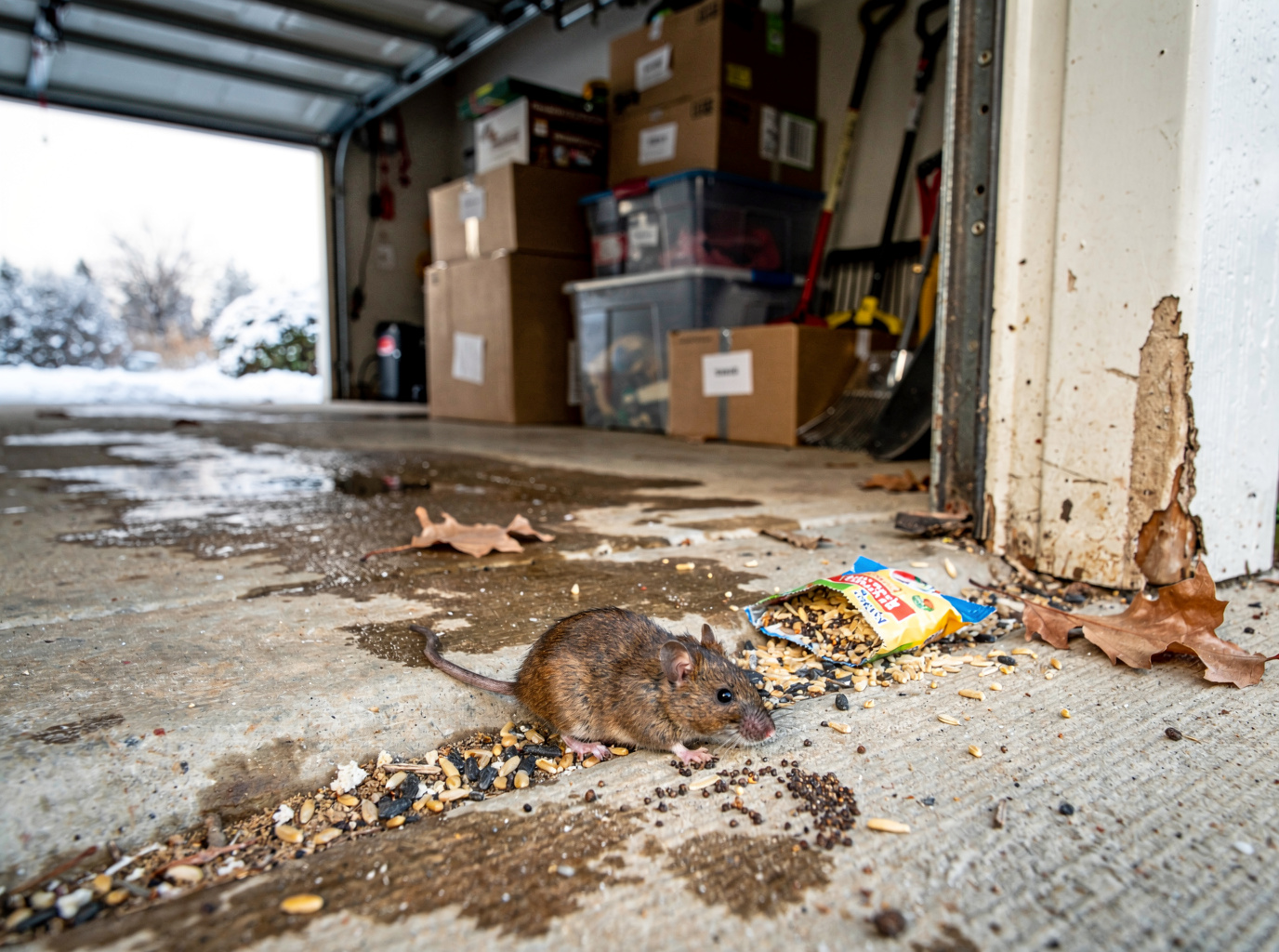
Rodents in Pryor garages move indoors once nighttime lows dip below 32 degrees, seeking consistent warmth near stored vehicles and boxes. This shift happens earlier in older Downtown Pryor homes with unsealed foundation gaps than in newer East Pryor builds. Mice and rats exploit the same mild winter days that allow outdoor activity, using daytime warmth to scout entry points along garage doors and utility lines.
Entry Points Common in Pryor Garages
Pryor garages built before 1980 often feature 1/4-inch gaps along concrete slabs and door tracks that allow house mice to slip through within minutes. Utility penetrations for dryer vents and water lines create direct paths from the exterior, especially where soil settles unevenly near Pryor Creek Golf Course properties. Residents in East Pryor report repeated issues when leaves and debris pile against roll-up doors, creating ramps that rats use to reach higher openings. These access routes stay viable through the county's mild winters because freeze-thaw cycles rarely seal them shut. Checking these spots monthly prevents the first wave of activity that typically begins in late November.
Nesting Habits Shaped by Local Conditions
Once inside, rodents build nests in insulation batts or cardboard stored along garage walls, using shredded paper and fabric scraps gathered from nearby trash bins. The humid subtropical climate keeps relative humidity high enough that mice can survive without frequent water sources, relying instead on condensation along metal garage doors. In Mayes County homes near the courthouse square, rats often travel between attached garages and crawl spaces because the connected structures provide multiple temperature zones. Nests reach full size within 10–14 days when food crumbs from holiday projects remain available. This rapid buildup explains why single sightings in December frequently become active colonies by mid-January.
Daily Movement Patterns During Mild Winters
Rodents in Pryor remain active on days when highs reach the mid-50s, foraging along fence lines before returning to garages at dusk. Their paths follow the same routes used in Claremore and Vinita because the flat terrain and drainage ditches provide cover. Nighttime activity peaks between 8pm and 2am when garage lights are off, allowing safe movement across open floors. Catoosa commuters who leave vehicles parked for days notice more droppings because the undisturbed space gives rodents longer foraging windows. These patterns differ from summer months when outdoor food sources keep rodents away from structures for weeks at a time.
Monitoring Steps That Match Pryor Housing Stock
Inspect garage interiors weekly using a flashlight along baseboards and behind stored items, looking for fresh droppings the size of rice grains. Place non-toxic tracking powder near suspected entry points to confirm travel routes without disturbing nests. Homeowners in older Downtown Pryor neighborhoods benefit from sealing gaps with steel wool before adding foam, because rodents chew through foam within days. Keep firewood and cardboard elevated on pallets at least 6 inches off the slab to remove nesting material. These steps reduce the chance that a winter visitor becomes a breeding population before spring.
When Behavior Indicates Professional Help
Repeated droppings near the same corner after cleaning or gnaw marks on stored boxes signal that exclusion work is needed beyond basic sealing. Rodent control technicians familiar with Mayes County garages can locate hidden entry points along shared walls that homeowners often miss. Properties in East Pryor frequently require additional attention to drainage swales that channel rodents toward foundations. For readers noticing similar issues in attics, the article Fall Pest Proofing Tips For Pryor Attics covers overlapping exclusion methods. Those dealing with rural properties may also find value in What Causes Rodent Infestations In Rural Pryor Homes. Contact Pryor Pest Control Pros at 1498 S Elliott St, Pryor, OK 74361 during Mon–Fri 8am–6pm or Sat 9am–2pm for an inspection focused on garage-specific winter activity.