
2026-08-29 ·
What Causes Rodent Infestations In Rural Pryor Homes
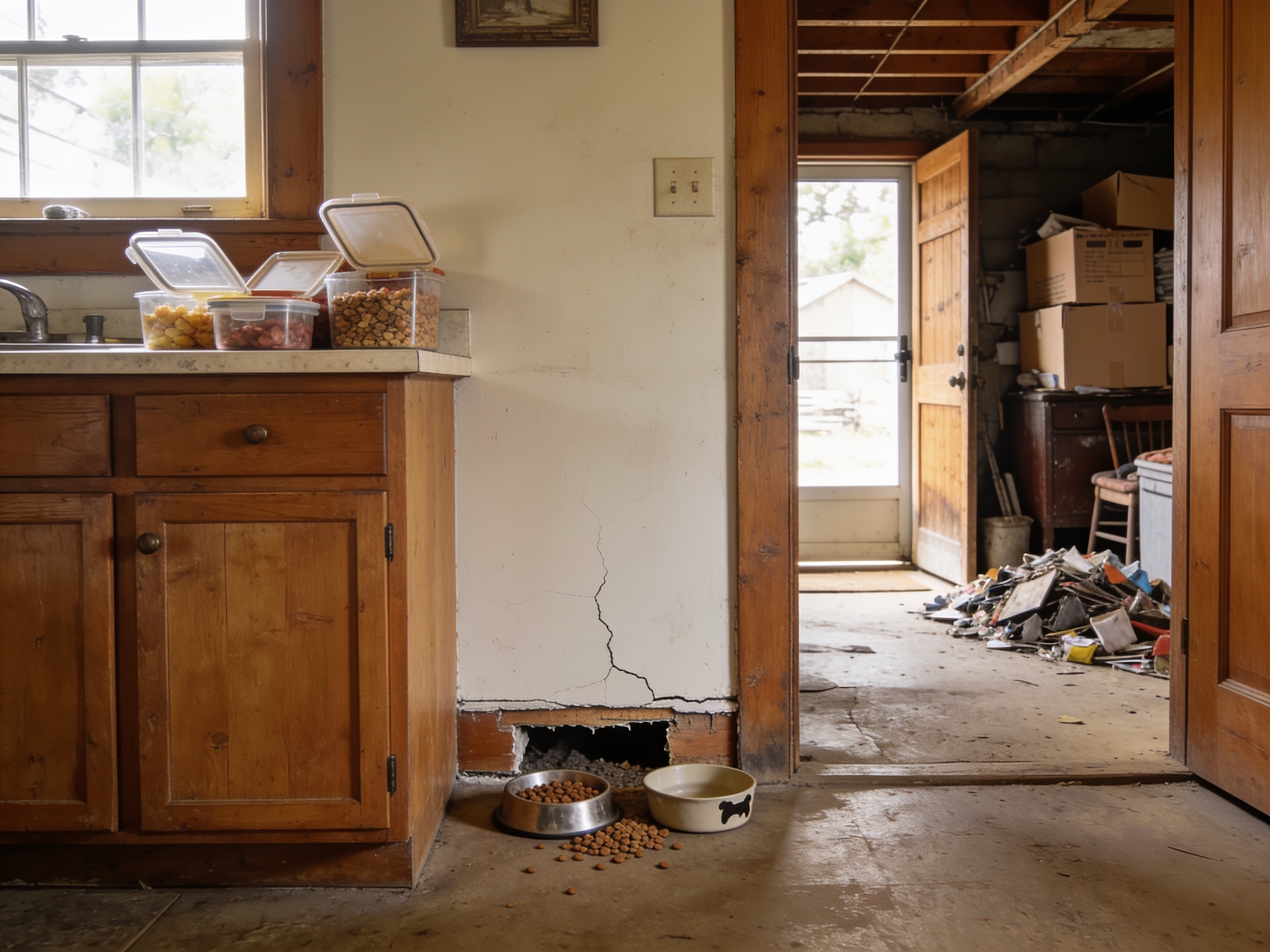
Rural homes around Pryor attract rodents mainly because of abundant food sources from nearby agricultural land, gaps in older foundations, and the mild winters that let mice and rats remain active year-round in Mayes County. These factors combine to create steady entry and nesting opportunities that urban properties rarely match.
Food Sources Around Rural Properties
Rural yards in East Pryor and near the Pryor Creek Golf Course often sit close to grain fields, livestock feed, and bird feeders that supply steady calories for Norway rats and house mice. Fallen fruit from orchards and unsecured trash cans add to the draw, especially after harvest when rodents move from fields into yards. Homeowners who store pet food or birdseed in garages without sealed containers see repeated visits because rodents can smell the oils from several hundred feet away. Removing these sources cuts the primary reason rodents establish colonies on rural lots.
Entry Points in Older Housing Stock
Many homes in Downtown Pryor and surrounding rural stretches were built before modern sealing standards, leaving gaps around sill plates, utility penetrations, and crawl-space vents that measure as small as a quarter-inch. Mice exploit these openings to reach wall voids and attics where insulation provides nesting material. Mild winters keep soil temperatures above freezing, so rodents stay active instead of entering true hibernation and continue widening holes through spring. Sealing these points with steel wool and caulk remains the most direct fix for preventing indoor access.
Seasonal and Climate Influences
Mayes County’s humid subtropical pattern brings hot summers that drive rodents toward shaded crawl spaces and mild winters that allow breeding cycles to continue without the die-off seen farther north. After heavy spring rains, saturated ground pushes mice from fields into drier residential structures. The same humidity that supports mold growth also softens wood siding, creating additional chew points. Linking these weather patterns to increased activity helps residents time inspections before populations peak in late summer.
How Nearby Land Use Increases Risk
Properties bordering open land between Pryor and Claremore or Vinita experience higher traffic because rodents travel along fence lines and ditches that connect fields to homes. Barns and outbuildings common on rural acreage supply sheltered harborage that then spills into main residences. Rodent Control programs tailored to these corridors focus on perimeter bait stations rather than indoor traps alone. Homeowners who maintain a 3-foot vegetation-free zone around foundations reduce the cover rodents use during these movements.
Practical Steps That Address Root Causes
Start by walking the exterior during daylight to locate gaps larger than a dime, then check attics and crawl spaces for droppings near stored items. Store firewood at least 20 feet from the house and off the ground, following guidance in Storing Firewood To Avoid Bugs In Pryor Backyards. Reduce moisture around the foundation by extending downspouts and fixing grading so water flows away from the structure. For ongoing pressure common in East Pryor, schedule quarterly exterior treatments that target travel routes before rodents reach the home.
Connecting these factors shows why rural Pryor homes see more consistent rodent pressure than properties in denser towns. Addressing food, shelter, and entry points together produces longer-term results than reactive trapping alone.