
2026-08-29 ·
Identifying Black Widow Spiders Around Pryor Properties
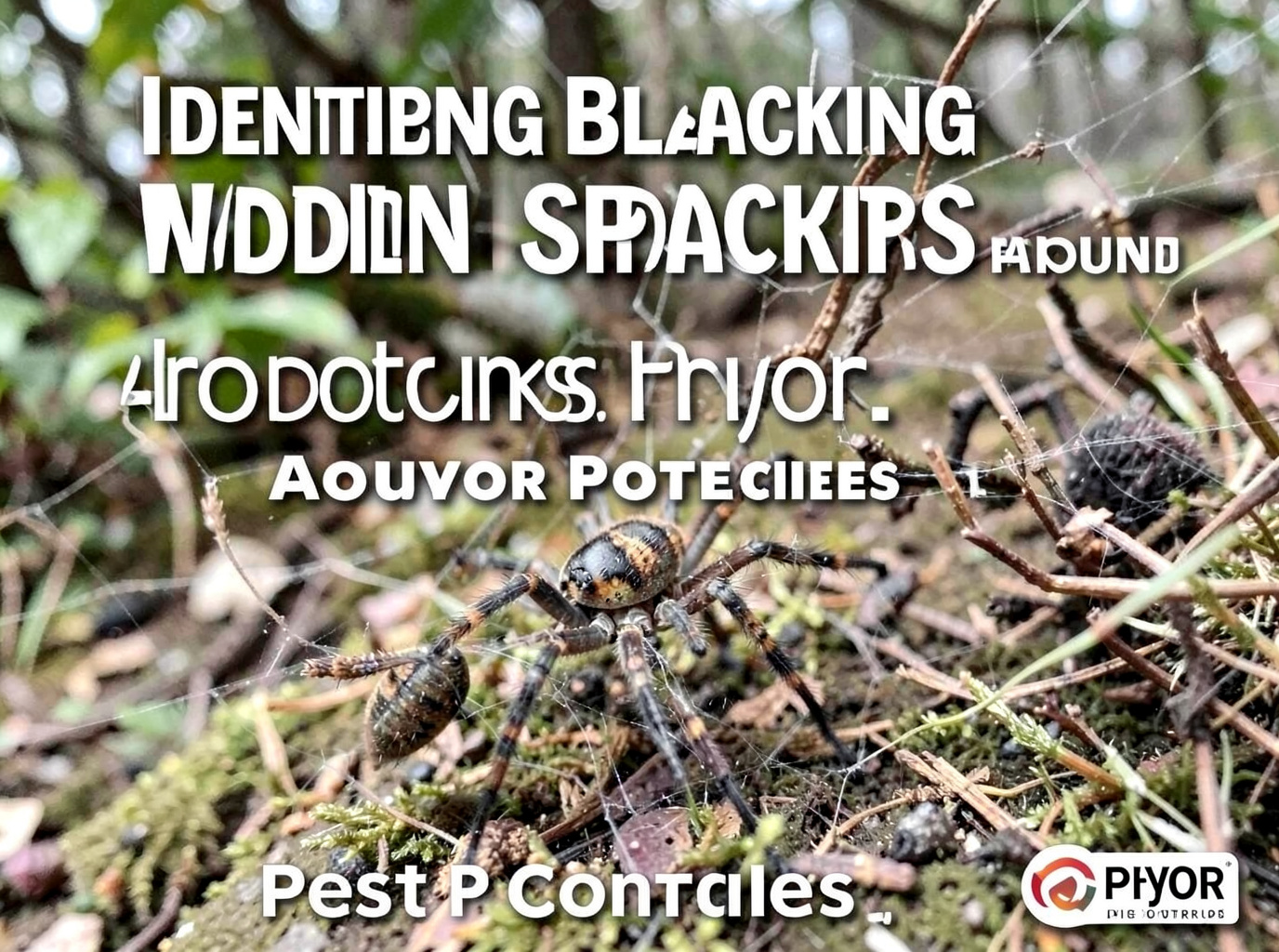
Black widow spiders around Pryor properties show a glossy black body with a red hourglass shape on the underside of the abdomen and reach 1.5 inches across the legs when fully grown. Females carry this marking consistently while males stay smaller and lack the bright red pattern. These traits appear most often in older homes and outbuildings scattered through Downtown Pryor and East Pryor where wood piles, crawl spaces, and foundation cracks stay undisturbed.
Physical Characteristics
Adult female black widows measure about 0.5 inches in body length with a leg span reaching 1.5 inches. Their abdomen appears round and shiny black except for the red hourglass that faces downward. The hourglass can vary slightly in thickness but always shows two connected triangles. Egg sacs measure roughly 0.5 inches across and display a white or tan papery texture. Young spiders start with lighter coloring and gain the full black and red pattern after several molts. These details separate black widows from brown widows or other orb weavers found in Mayes County yards. Homeowners who turn over stored lumber near the Mayes County Courthouse or along Pryor Creek Golf Course often spot the exact hourglass marking on the spider's underside.
Common Habitats in Mayes County
Black widows favor dark, sheltered spots that hold moisture in the humid subtropical climate of Mayes County. They build irregular webs in crawl spaces under homes built before 1970, inside sheds, and beneath outdoor furniture left on patios in East Pryor. Woodpiles stacked against foundations, unused flowerpots, and gaps around utility boxes also attract them. The mild winters allow webs to persist longer than in colder regions while hot summers drive spiders toward shaded garage corners and basement window wells. Properties near Claremore, Vinita, and Catoosa share the same soil and vegetation that support these conditions. Residents checking under deck boards or inside meter boxes after spring rains frequently encounter the spiders in these exact locations.
Seasonal Patterns and Behavior
Activity peaks from April through October when temperatures support web building and egg production. Females remain in the same web for weeks while males wander in search of mates during late summer. Black widows rarely bite unless the web is disturbed by hands reaching into tight spaces. Their venom affects the nervous system but encounters stay uncommon when people use gloves and flashlights during inspections. In winter months the spiders retreat deeper into wall voids and under leaf litter yet remain active on warmer days. This pattern repeats across Downtown Pryor neighborhoods where older frame houses provide consistent shelter.
Distinguishing From Similar Spiders
Several spiders in the area share black coloring but lack the red hourglass. False black widows show a more brownish hue and different web shape. Wolf spiders appear larger and hairy with visible eyeshine at night. Jumping spiders display shorter legs and quick movements rather than stationary web sitting. Checking the underside of any dark spider found in sheltered spots confirms the hourglass marking before further action. Property owners who photograph the spider from multiple angles can compare the image against verified local examples before deciding on next steps.
For ongoing prevention around Pryor properties, professional spider control addresses entry points in older structures. Homeowners in East Pryor also review rodent-related clutter issues that create additional hiding spots.